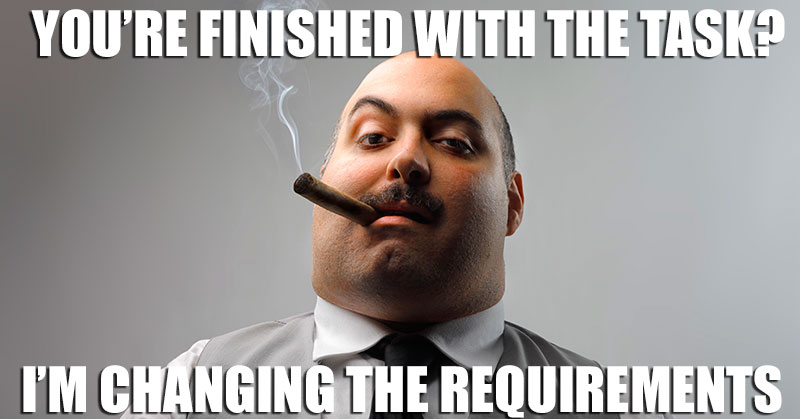
I really needed to reorganize to get back on track towards achieving the goals I set out to do this year. I rarely ever miss targets ever since ever but the past few months got me disoriented that I lost my groove. I was still meeting the targets but I struggled every step of the way. I realized I can’t get back on track working like that.
Reorganizing meant that I have to keep my focus on work and meet my productivity benchmarks. I figured I was working on so many topics in a span of a day that I struggle to get my groove and my focus. The flaw with my previous schedule is efficiency. There are just so many sub-tasks when engaging a topic (say, when writing: reading, writing, editing, posting). An hour or two just isn’t sufficient for those tasks. There’s also the sheer effort of shifting from one topic to another unrelated to the previous. The main reason why I entered such a slump is my failure to adjust when my targets changed earlier this year. New goals need new strategies.
So, instead of rationing out my hours over a single work day, I configured my schedule to work with half-days (around four hours). That way, I can just focus on one topic, read all that I need to know, then write and edit as many articles as I can to cover. The four-hour span comfortably works for that. That way, I can also stockpile my writing in order to meet the quota for the next days when I’ll be working on another area. (Thank goodness for scheduled posting!) I’ve subdivided my workdays as well so that material remains fresh.
Tried it out for the past week and it seems to be working like a charm. Let’s see for the coming week if I’d be able to sustain it.
Details. Details. Details. Can’t emphasize this enough. A few of my acquaintances who have just recently graduated are wondering why getting a job suddenly became so tough compared to how graduates from last year had it. Well, for one, the global economy is really shot. Most multinationals (the biggest employers in the country) have frozen their hiring leaving a lot more people to compete with a few positions across industries.
However, one X factors to getting jobs is how an applicant presents himself or herself. Here’s a reality that you really have to consider. You might be good and quite competent, however, the odds are that there are other good people around, probably just as good or even better than you. Don’t let your school, degree, or honors be a guarantee that you’re the fastest gun in the west and that you have to be paid top dollar.
With the financial crisis sending even the best people in other industries back to the job market, companies can hire people who have three times the knowledge and experience at the say pay grade. At the end of the day, the it’s the person who can make compromises and position himself or herself as of the most and best value to the company who will get the job.
One career drawback of working from home is that it takes its toll on the social aspect of one’s life and career. As for career advancement, who knows when the recession will end or, God forbid, another dotcom bubble bursts? Not that I’m saying that working online is a dead-end path (since there are huge opportunities that can be had) but it can cause one to get really comfortable or stagnate. That, I don’t want to happen.
The past week and at least the coming have been and will be quite the busy weeks for me. I figured that aside from concentrating solely on my money-making efforts (which are mostly writing jobs), I should also start re-establishing a public face.
My work with the university is quite limited since I’m basically just in when I have classes but otherwise, I’m working elsewhere (at home, actually) and it’s difficult to make an impact when you’re not there. I have had quite the experience in in my former industry (education technology) both in the development side and the business side. If I can only find an opportunity to to converge the two so that I’d be able to weasel my way into two fields with a single effort.
I might have been brash to attack my own (dying) degree but reality does affirm that English Studies (BAES, UP Diliman) has zero profitability. Survey the graduates of our batch and not one (aside from those who are teaching) has found a field to which the core concepts of the program can be applied. Most have graduated with law degrees, some are in call centers, and others in random corporate work.
This year, a number of our majors have graduated and face the real world. Interesting to find out what careers they will pursue. I wouldn’t be surprised at the diversity of choices.
Over the years, I’ve seen fellow alums struggle to find jobs and careers to which the learning in the program can be directly applied. This greatly limits the number of choices that would fit the applicability and profitability criteria. Compare the jobs to which our graduates have access and most of them offer wages in the lower salary ranges. A fresh graduate of our program is lucky to even get half of a fresh graduate with a different degree (like an engineering or a business degree) is offered.
Bryan (who happens to have finally launched Constant Random Change) and I have been discussing all sorts of things from technology to business. One points of our discussion was this observation on management and the technology business by former Ruby on Rails hacker Zed Shaw. Here’s his CUSEC speech where he raised these points.
A bit of tech discussions in the middle but the juicier points on management and business can be had after. This is a real treat for any graduate of tech who plans to make money using related skills.
All brand names, logos and images are copyright of their respective owners. Site owner is not liable for any comments made on this site. Grammar Nazis will be hanged, drawn, and quartered. If what is found here is not to your liking, feel free to visit another website.